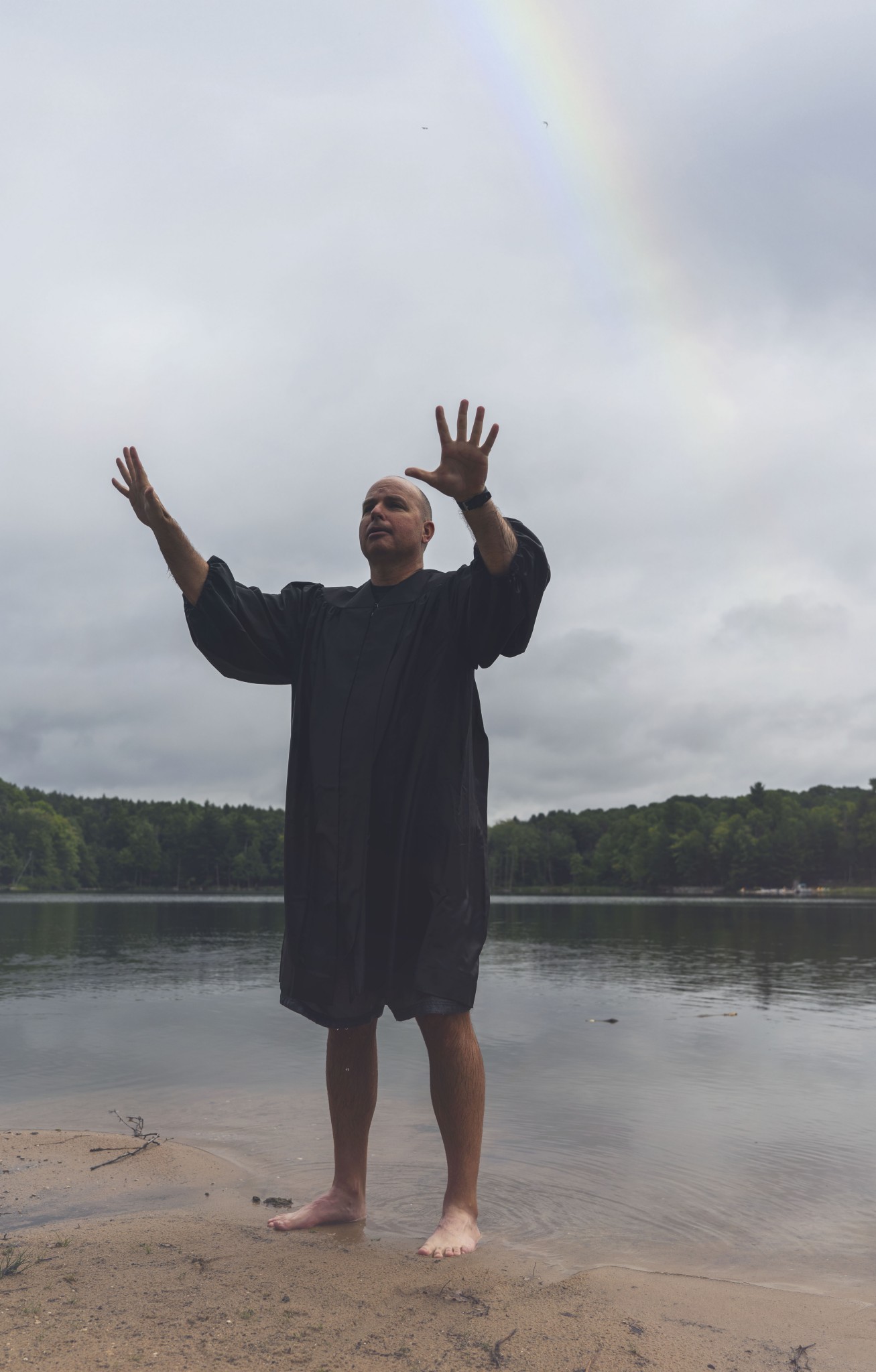
Photo Credit: Rose Smeltzer

1 year ago today was wedding rehearsal for Anna and Ty. I am so very proud of both of them and how they have handled their first year of marriage.

Highlights from Chapter 5 – “The Case for Timefulness”
“Pain plus reflection equals progress.” Montgomery, Daniel. How to Be Present in an Absent World (p. 53). Zondervan. Kindle Edition.
“The key to getting back our time, then, is to learn how to be fully present.” Montgomery, Daniel. How to Be Present in an Absent World (p. 54). Zondervan. Kindle Edition.
“According to Marc Wittman, “Through mindfulness and emotional control, the tempo of life that we experience can be reduced, and we can regain time for ourselves and others.”4” Montgomery, Daniel. How to Be Present in an Absent World (p. 55). Zondervan. Kindle Edition.
“Time is both a gift and a responsibility. If we never slow down enough to be truly present, we’ll squander that gift in frenzied absence. On the flip side, if we misunderstand self-awareness as an invitation to constant navel-gazing, we’ll punt on our responsibility to make the most of what God has given. In the end, we need the wisdom that comes from an intimate knowledge of our finitude. Only then will we escape the tyranny of the clock and feel truly free to get our heads back in the game.” Montgomery, Daniel. How to Be Present in an Absent World (p. 57). Zondervan. Kindle Edition.
Personal Reflection – So much of the currently productivity literature focuses on the management of time to help us go faster and do more. There is a place for good stewardship and efficiency. But what if a key missing component to fruitfulness is actually to slow down? What if we actually accomplish more by doing less, more slowly? The “more” has to be clearly identified so that we are not just passive and lazy (which Jesus clearly was not). I think the “more” has to do with the “fruit that will last”. God, help us to learn the difference between fruitfulness and busyness.
Highlights from Chapter 4 – “Where Did All Our Time Go?”
“I showed up, but I wasn’t present.” Montgomery, Daniel. How to Be Present in an Absent World (p. 46). Zondervan. Kindle Edition.
“Yet our problem with time runs much deeper than learning to master our calendar and fend off time bandits. Ultimately, our problem with time does not lie outside of us; it’s in us. We’re running out of time because we’re thinking, feeling, and living out of time. In a word, we’re absent.” Montgomery, Daniel. How to Be Present in an Absent World (p. 51). Zondervan. Kindle Edition.
“And the only way to solve our problem is to reenter time and “recover the rhythm and order of man’s real nature” as we live within the “appointed times” that God has determined for each of us (see Acts 17:26).11 This is what I call timefulness, and I’ll spend the next several chapters unpacking what it entails.12” Montgomery, Daniel. How to Be Present in an Absent World (p. 51). Zondervan. Kindle Edition.
Personal Reflection – I remember those days in elementary school when the teacher would call the roll and the expected response was “Here,” or “Present.” But what is true physically isn’t necessarily true spiritually, emotionally, or relationally. We can be physically “here,” but a million miles away, robbing God and others of our love and attention. How significant this is all relationships, but especially in marriage and parenting. I am looking forward to learning more about this concept of timefulness in the chapters to come.
Highlights from Chapter 3 – “How Do We Get Our Humanity Back?”
“The key to presence, then, is learning what it means to be not just a human but this human—the person God made you to be.” Montgomery, Daniel. How to Be Present in an Absent World (p. 28). Zondervan. Kindle Edition.
“In 2016, Andrew Sullivan wrote a popular article for New York Magazine titled “I Used to Be a Human Being.”1 As someone who spent the better part of a decade in front of a computer, Sullivan laments the dehumanizing effect of “the web.”” Montgomery, Daniel. How to Be Present in an Absent World (p. 29). Zondervan. Kindle Edition.
“As theologian Anthony Hoekema points out, the “image of God” can be read as both a noun and a verb.4 That is, the image is both something we are and something we do.” Montgomery, Daniel. How to Be Present in an Absent World (p. 31). Zondervan. Kindle Edition.
“In downplaying Jesus’s humanity, we discount our own.” Montgomery, Daniel. How to Be Present in an Absent World (p. 34). Zondervan. Kindle Edition.
“All of life,” he says, “is lived out of a sense of identity, even if one’s sense of identity is confused or unconscious.”10 Grace allows us to look honestly at ourselves and reorient our identities according to the truth of who God says we are.” Montgomery, Daniel. How to Be Present in an Absent World (p. 35). Zondervan. Kindle Edition.
Personal Reflection: I am challenged by the example of Jesus as the fulfillment of what it truly means to be human. I will only fulfill my own humanity by finding my identity in Him. Satan will do whatever he can to get me to find my identity in something else that ultimately will not satisfy and will cause me to settle for a lesser story. A key component to the ministry of preaching and teaching that I have been given is to bring people back to their true identity in Christ, so that they will be fully human in the way that God intends for them.

I wasn’t there when this picture was taken, but it definitely makes me smile. My son Josh and my son-in-law Ty got to be together last weekend in Kansas City to reunite with college buddies. I love and miss them both very much.
Highlights from Chapter 2 – “The Case for Presence”
“…we are oblivious to our obliviousness. Even though 95 percent of people think they’re self-aware, only 10 to 15 percent actually are. Kathryn Schulz describes the former demographic well: “A whole lot of us go through life assuming that we are basically right, basically all the time, about basically everything.”7 Montgomery, Daniel. How to Be Present in an Absent World (p. 22). Zondervan. Kindle Edition.
In a study of seventy-two senior executives, the American Management Association found self-awareness to be “the strongest predictor of overall success.”11Montgomery, Daniel. How to Be Present in an Absent World (p. 24). Zondervan. Kindle Edition.
Present leaders are emotionally and socially self-aware. They understand themselves and others. They don’t just create high-power teams; they engage their employees on a human level in order to draw out their absolute best. Montgomery, Daniel. How to Be Present in an Absent World (p. 25). Zondervan. Kindle Edition.
Personal Reflection: I think we are all oblivious to our obliviousness to one degree or another. This is one of the many reasons we desperately need authentic community. We need people in our lives to lovingly call out our lack of self-awareness when necessary. We will never be our best or bring out the best in others if we are not self-aware.
How might this truth be reflected in your marriage? In your parenting? In your leadership?
To whom have you given permission to lovingly call out your lack of self-awareness? Are you willing to receive this correction? What are the consequences if you are not?




 With My Own Eyes