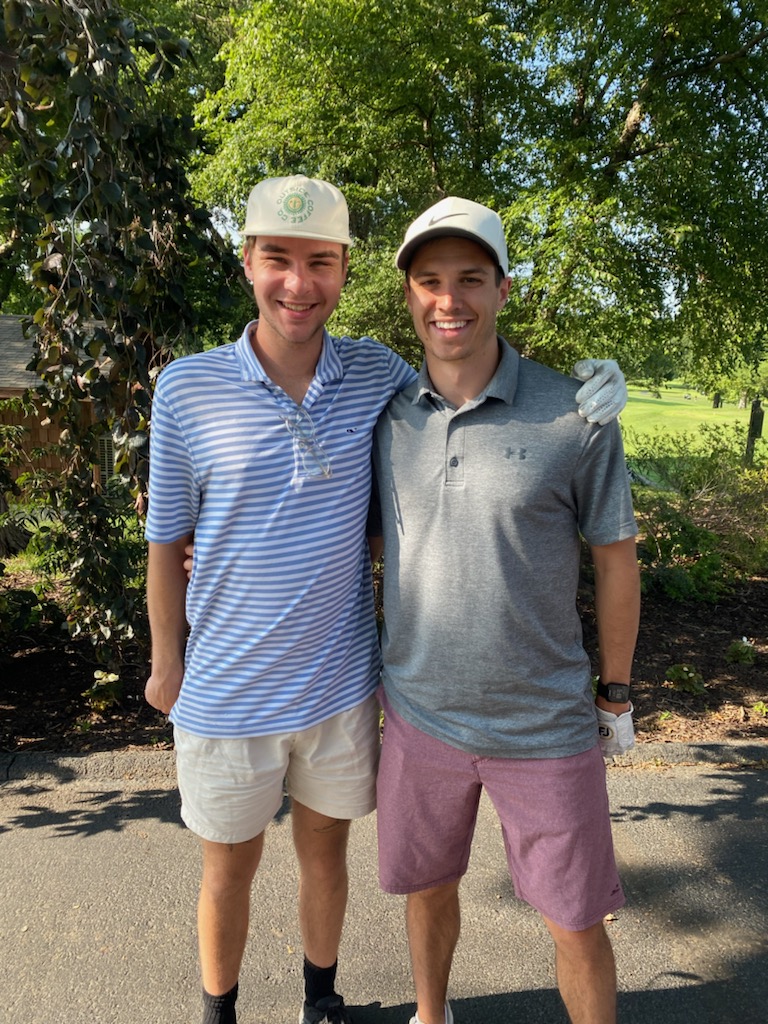
I wasn’t there when this picture was taken, but it definitely makes me smile. My son Josh and my son-in-law Ty got to be together last weekend in Kansas City to reunite with college buddies. I love and miss them both very much.
I wasn’t there when this picture was taken, but it definitely makes me smile. My son Josh and my son-in-law Ty got to be together last weekend in Kansas City to reunite with college buddies. I love and miss them both very much.

Highlights from Chapter 2 – “The Case for Presence”
“…we are oblivious to our obliviousness. Even though 95 percent of people think they’re self-aware, only 10 to 15 percent actually are. Kathryn Schulz describes the former demographic well: “A whole lot of us go through life assuming that we are basically right, basically all the time, about basically everything.”7 Montgomery, Daniel. How to Be Present in an Absent World (p. 22). Zondervan. Kindle Edition.
In a study of seventy-two senior executives, the American Management Association found self-awareness to be “the strongest predictor of overall success.”11Montgomery, Daniel. How to Be Present in an Absent World (p. 24). Zondervan. Kindle Edition.
Present leaders are emotionally and socially self-aware. They understand themselves and others. They don’t just create high-power teams; they engage their employees on a human level in order to draw out their absolute best. Montgomery, Daniel. How to Be Present in an Absent World (p. 25). Zondervan. Kindle Edition.
Personal Reflection: I think we are all oblivious to our obliviousness to one degree or another. This is one of the many reasons we desperately need authentic community. We need people in our lives to lovingly call out our lack of self-awareness when necessary. We will never be our best or bring out the best in others if we are not self-aware.
How might this truth be reflected in your marriage? In your parenting? In your leadership?
To whom have you given permission to lovingly call out your lack of self-awareness? Are you willing to receive this correction? What are the consequences if you are not?
Highlights from Chapter 1 – “How Long Can You Keep This Up?”
“This book was motivated by the problem of absence and the pain it causes to us and those around us.” Montgomery, Daniel. How to Be Present in an Absent World (p. 15). Zondervan. Kindle Edition.
“So what is this book about? In a nutshell, it’s about showing up to your own life.” Montgomery, Daniel. How to Be Present in an Absent World (p. 18). Zondervan. Kindle Edition.
“…the pain we experience as leaders is a function of one thing—absence.” Montgomery, Daniel. How to Be Present in an Absent World (p. 18). Zondervan. Kindle Edition.
“The remedy we’re after—the cure we believe will not only rid us of our pain but help us find a new level of fulfillment and success—lies in rediscovering what it means to be fully present as leaders. For now, we’ll define that sense of presence as being where you are in time and space, fully attuned to your bodily and social presence with a clear sense of where you’ve been (past), where you’re going (future), and how that story impacts the present.” Montgomery, Daniel. How to Be Present in an Absent World (p. 19). Zondervan. Kindle Edition.
Personal Reflection: There’s an old saying, “Be where your feet are.” In this world of overstimulation and short attention spans, that’s no easy thing. I personally struggle with the whole concept of being fully present. It is a weakness in me as a human being and as a leader. I’m looking forward to giving this concept some much needed attention in the days to come.
(Note: Reflecting on this book does not communicate full endorsement of its content. As the old saying goes, “Chew the meat and spit out the bones.”)

 With My Own Eyes